
The government on Tuesday increased the windfall profit tax on crude oil produced in the country and reduced the levy on exports of diesel. The tax, levied in the form of Special Additional Excise Duty or SAED, on domestically produced crude oil was increased to Rs 9,800 per tonne from Rs 9,050 a tonne, according to an official notification. SAED on the export of diesel was reduced to Rs 2 per litre from Rs 4 a litre and on jet fuel or ATF to nil from Rs 1, the notification said.

Kuwait, the world's third largest oil producer, on Wednesday, said it was keen on investing in Indian refineries even as it plans to sell more crude to India.
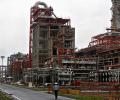
The Rs 3-trillion West Coast or Nanar refinery has all the potential to become India's flagship petrochemicals project, with the planet's largest oil producer Saudi Aramco as its biggest shareholder. Yet the locals don't see the plant as a harbinger of better times.
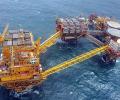
ONGC's overseas arm applied for a sanctions waiver to access $500 million dividend from two Venezuelan projects.

The enduring relationship between the two countries have survived the disintegration of the erstwhile USSR in 1991, the end of the Cold War and the regime change in both countries, points out Rup Narayan Das.
India's export of fuels like diesel to the European Union jumped 58 per cent in the first three quarters of 2024, with a bulk of them likely coming from refining discounted Russian oil, according to a monthly tracker report. The EU/G7 countries in December 2022 introduced a price cap and an embargo on the imports of Russian crude oil in a bid to cripple Kremlin's revenue and create a vacuum in its funding for the invasion of Ukraine.
A fall in crude oil price and Aramco's $75 billion annual dividend commitment may have delayed Saudi company picking a stake in Reliance Industries Ltd's oil-to-chemical unit (O2C), research firm Jefferies said. Richest Indian Mukesh Ambani had in August 2019 announced talks for the sale of a 20 per cent stake in the O2C business, which comprises its twin oil refineries at Jamnagar in Gujarat and petrochemical assets, to the world's largest oil exporter. The deal was to conclude by March 2020 but has been delayed for reasons not disclosed by either company.

Indian Oil Corporation (IOC), the nation's largest oil firm, has renewed a deal to buy up to 2 million tonnes of crude oil in 2022 from Russia's Rosneft, the Russian oil producer said. IOC had in February 2020 signed a deal with Rosneft Oil Company to import up to 2 million tonnes of oil via the port of Novorossiysk. In 2021, the deal envisaged supply of up to 1.7 million tonnes of crude oil but IOC bought just on parcel or shipload as the cost of transporting the oil made it uneconomical, when compared to alternatives. For 2022, the deal is for the supply of up to 2 million tonnes of oil from the Black Sea port of Novorossiysk.
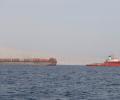
US strikes on Iran's three main nuclear facilities have once again raised concerns that Tehran might shut down the Strait of Hormuz - one of the world's most critical chokepoints, through which a fifth of global oil and gas supply flows.

Aramco also plans to invest in building India's largest oil refinery on the country's west coast.
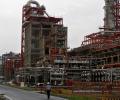
Rosneft bought a 49 per cent stake in Essar Oil's refinery port and petrol pumps, while Netherlands-based Trafigura Group Pte, one of the world's biggest commodity trading companies, and Russian investment fund United Capital Partners split another 49 per cent equity equally.

Last June, the group had delisted Essar Energy from the London Stock Exchange as well.
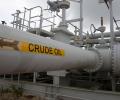
The government has cut windfall profit tax on export of diesel and ATF to their lowest while also reducing the levy on domestically-produced crude in line with softening international oil prices, according to an official order. The levy on crude oil produced by companies such as Oil and Natural Gas Corporation (ONGC) has been cut to Rs 4,350 per tonne from Rs 5,050 per tonne, the order dated February 15 said. Crude oil pumped out of the ground and from below the seabed is refined and converted into fuels like petrol, diesel and aviation turbine fuel (ATF).
The government has reduced the windfall profit tax levied on domestically-produced crude oil as well as on the export of diesel and ATF, in line with softening international oil prices, according to an official order. The levy on crude oil produced by companies such as Oil and Natural Gas Corporation (ONGC) has been cut to Rs 1,900 per tonne from Rs 2,100 per tonne, the order dated January 16, said. Crude oil pumped out of the ground and from below the seabed is refined and converted into fuel like petrol, diesel and aviation turbine fuel (ATF).

The government has brought back the windfall profit tax on domestically produced crude oil after international prices firmed up while the levy on export of diesel has been cut to nil, according to an official order. The levy on crude oil produced by companies such as Oil and Natural Gas Corporation (ONGC) is now Rs 6,400 per tonne with effect from Wednesday, the order dated April 18 said. At the last revision on April 4, windfall tax on domestically produced crude oil was cut to nil as international oil prices dipped below $75 per barrel.

The exploration and production assets of Essar Oil will not be part of the Rosneft deal and would continue to remain with the Group.
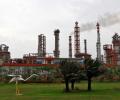
The agreement came in after the Ruias agreed to clear most of the Rs 26,000-crore dues to the lenders on completion of the transaction.

India, the world's third largest oil consuming and importing nation, in July bought $2.8 billion worth of crude oil from Russia, second only to China which remains the largest importer of Russian oil, a report said. Russia emerged as India's biggest supplier of crude oil, which is converted into fuels like petrol and diesel in refineries, after Russian oil was available on discount following some European nations shunning purchases from Moscow over its invasion of Ukraine in February 2022.

According to sources, Russian energy giant Rosneft or its affiliates, Saudi Aramco and Reliance Industries are in race for BPCL's three refineries - Mumbai, Kochi in Kerala and Bina in Madhya Pradesh - 16,309 petrol pumps, 6,113 LPG distributor agencies and more than a fifth of 256 aviation fuel stations in the country.

The company feels valuations are low and the demand would later rise.
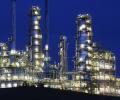
BPCL's impending privatisation and RIL's stake sale to Saudi Aramco raise questions about the future of the West Coast Refinery, once touted as the world's largest.

Prime Minister Narendra Modi on Friday invited President Volodymyr Zelenskyy to visit India and the Ukrainian leader said he would be happy to travel to the 'great' country.

India expects to remain unscathed this time, mainly because it is in a sweet spot as the world's third largest oil consumer, after the US and China, says Subhomoy Bhattacharjee.
Saudi Arabia, which has the world's largest oil reserves, has said that it may increase its stock by around 200 billion barrels and was also mulling investment in building refineries in India among other countries.
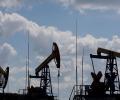
India's crude oil imports from Russia fell for a second straight month in January to its lowest in 12 months but the nation's insatiable appetite for Russian crude remains for the long term, according to data from energy cargo tracker and industry officials. Russia supplied 1.2 million barrels per day of crude oil to India in January, down from 1.32 million barrels in December and 1.62 million barrels in November 2023, according to data from energy cargo tracker Vortexa. Russia however continues to remain India's top oil supplier, accounting for a little less than a quarter of 4.91 million barrels a day of oil that the world's third largest energy consumer imported in January.
Indian Oil Corporation, the country's largest downstream company, has major plans for Nigeria, the world's eighth largest exporter of crude oil.

Leading oil companies dedicated the second day of India Energy Week (IEW) 2025 to announcing strategic deals and business agreements across the supply chain - from sourcing more crude oil supply to deploying more domestic ships and building gas distribution capacity.
The oil industry experienced three upheavals between 1973 and 1991, which seem to be etched in the memory of the industry's decision makers. Naturally, at the sign of a new crisis, the decision makers like to dip into those tumultuous decades to find ways to deal with the new shock, in addition, of course, to expert reports and forecasts. So, the industry bigwigs turned the pages of history to get a peek into the future of oil price movements after Russia invaded Ukraine in 2022, Israel attacked Gaza in 2023, Iran-linked Houthi rebels pounded tankers crossing the Red Sea in support of Palestine the same year, and Iran rained missiles on Israel in 2024.

Gautam Adani had in the late 1970s applied to join a Mumbai college for education, but the college rejected his application. He did not pursue education but turned to business and went on to build a $220 billion empire. About four-and-a-half decades later, he gets called to the same college to deliver a lecture to students on Teachers Day. Adani had moved to Mumbai at the age of 16 and started working as a diamond sorter.
India's imports of crude oil from Russia touched a new high of 1.64 million barrels per day in March and is now double of the purchases from Iraq - the nation's traditional top oil supplier. But the purchases appear to have plateaued as growth has slowed. Russia continued to be the single largest supplier of crude oil, which is converted into petrol and diesel at refineries, for a sixth straight month by supplying more than one-third of all oil India imported, according to energy cargo tracker Vortexa.
Reliance Petroleum, a subsidiary of Reliance Industries, India's largest company by market capitalisation, today commissioned its second refinery in a special economic zone (SEZ) at Jamnagar, adjacent to its existing facility, in Gujarat that will add 20 per cent to India's total crude oil refining capacity.
Essar has announced a $6bn expansion plan to more than triple capacity at its refinery, while Reliance, at its site a few kilometres away, is working on plans to almost double capacity.

Having created businesses ranging from world's largest single-location oil refining complex to nation's largest mobile network operators in just few years, billionaire Mukesh Ambani says his group Reliance Industries Ltd will never be complacent and will grow to be among the top 10 business conglomerates of the world. Addressing employees on Reliance Family Day - the birthday of the group's founder Dhirubhai Ambani, he said Reliance is now aiming to consolidate a place among global leaders in digital data platforms and AI adoption. "Today, the domestic and global environments for business are changing very fast.
Mukesh Ambani-promoted Reliance Industries Ltd (RIL) is evaluating a plan to set up its third refinery at Jamnagar in an ambitious project to reach a total capacity of 100 million metric tonne per annum, the largest at a single location in the world. The company has appointed a global oil and refinery consultancy firm to evaluate the feasibility of the project, which will help capitalise the increased requirement for global crude distillation capacity.

The government has cut the windfall profit tax on crude oil produced in the country while the levy on exports of diesel and ATF has been hiked, an official notification said. The tax, levied in the form of special additional excise duty or SAED, on domestically produced crude oil was reduced to Rs 6,700 per tonne from Rs 7,100 a tonne. SAED on the export of diesel was increased to Rs 6 per litre from Rs 5.50 a litre and on jet fuel or ATF to Rs 4 per litre from Rs 2, the notification said.

After missing two self-imposed deadlines, billionaire Mukesh Ambani's Reliance Industries Ltd on Friday announced recalibration of a proposed $15 billion deal to sell 20 per cent stake in its oil refinery and petrochemical business to Saudi Aramco, saying the two firms have agreed to re-evaluate the proposed investment in light of the Indian firm's new energy forays. The stake sale talks, which were first officially revealed in August 2019, are being reset in light of Reliance making forays into new energy business in recent months by investing $10 billion in alternative energy over three years. To pivot to green energy, it has already bought a German maker of photovoltaic solar wafers and signed a deal with a Danish company to manufacture hydrogen electrolysers in India.
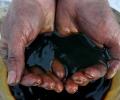
India's crude oil import bill is set to exceed $100 billion in the current fiscal year ending March 31, almost double its spending last year, as international oil prices trade at seven-year highs. India spent $94.3 billion in the first 10 months (April-January) of the ongoing financial year that started April 1, 2021, according to data from the oil ministry's Petroleum Planning & Analysis Cell (PPAC). It spent $11.6 billion in January alone when oil prices had started to surge.

Saudi Aramco chairman and head of the Kingdom's cash-rich wealth fund PIF Yasir Othman Al-Rumayyan will join the board of Reliance Industries Ltd as an independent director in a precursor to a $15 billion deal. Reliance chairman and Asia's richest man Mukesh Ambani, who had two years back disclosed the talks to sell a 20 per cent stake in the company's oil-to-chemical unit to Saudi Aramco, announced the appointment of Al-Rumayyan at the company's annual meeting of shareholders. Harvard educated Al-Rumayyan, 51, will replace Yogendra P Trivedi, 92, who has expressed a desire to retire, Ambani said. On the sale of a 20 per cent stake in the O2C business, he said the deal is likely to conclude this year.
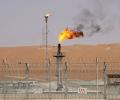
Billionaire Mukesh Ambani's Reliance Industries is reported to have held talks with Saudi Aramco on a cash and share deal for sale of a 20 per cent stake in its oil refining and petrochemical arm. Ambani had in August 2019 announced talks for the sale of a 20 per cent stake in the oil-to-chemicals (O2C) business, which comprises its twin oil refineries at Jamnagar in Gujarat and petrochemical assets, to the world's largest oil exporter. The deal was to conclude by March 2020 but has been delayed for reasons not disclosed by either company.
